LyondellBasellHow I found $7.5M in potential tariff costs in an afternoon
Context. A chemical manufacturer paid tariffs on raw materials that didn't qualify under USMCA. Each product was a recipe of multiple raw materials, and the same material appeared across hundreds of recipes.
Problem. Account specialists worked the catalog product-by-product. When a product got hit with a tariff, they dug through a convoluted spreadsheet to find which material caused it and what it would take to fix. Nothing showed which raw material, across the whole catalog, drove the most cost.
What I did. Designed and shipped a three-tab Dash product. The developers wanted it laid out input, research, analysis. I talked to the specialists and laid it out around what they needed to see first. I built the materials scatter plot myself in Python, on their real data.
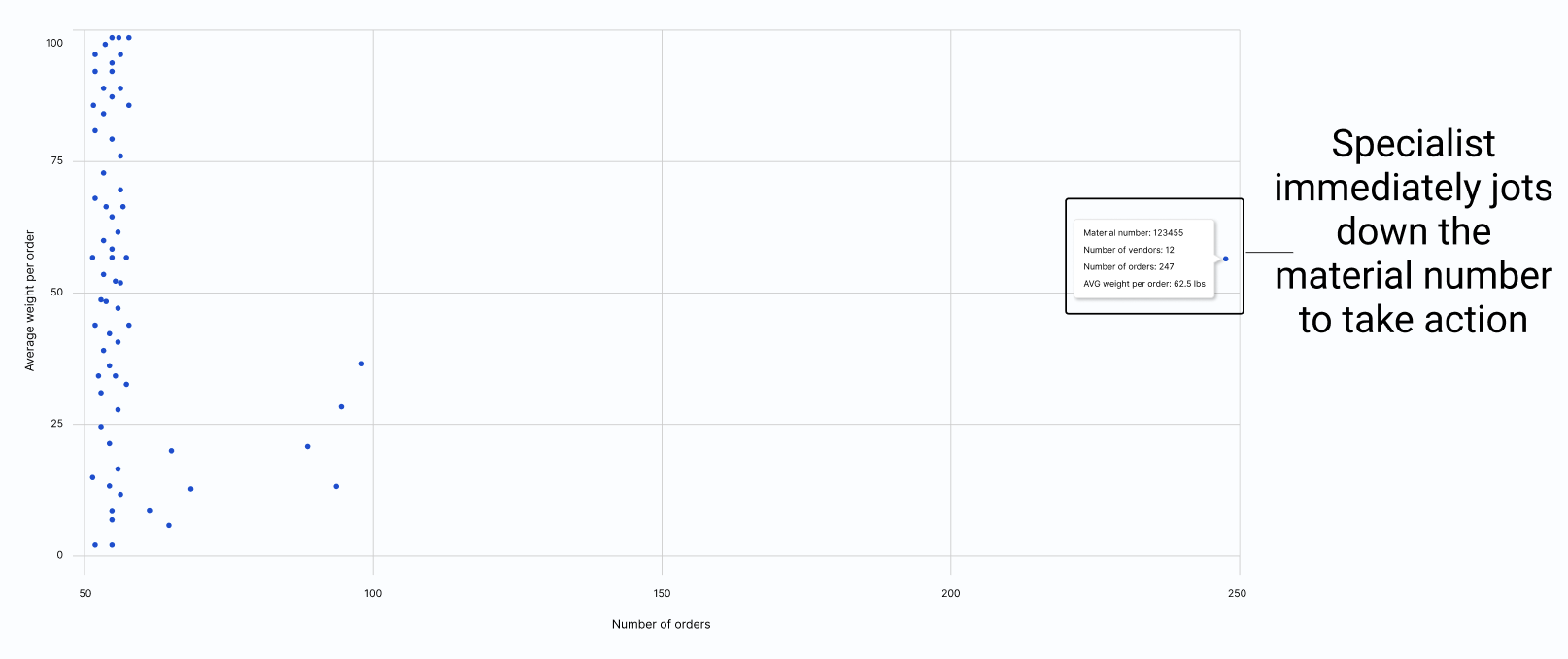
Impact. One raw material turned up in roughly 250 of the client's products, far more than anything else, as the largest source of tariff cost. The specialists wrote down the material number to investigate.
My estimate of the savings from qualifying it: $7.5M
Role: Principal Product Designer | Year: 2025 | Duration: 2 months
1
afternoon
250
orders affected
$7.5M
projected cost savings
Changing tariffs created costs the business couldn't see
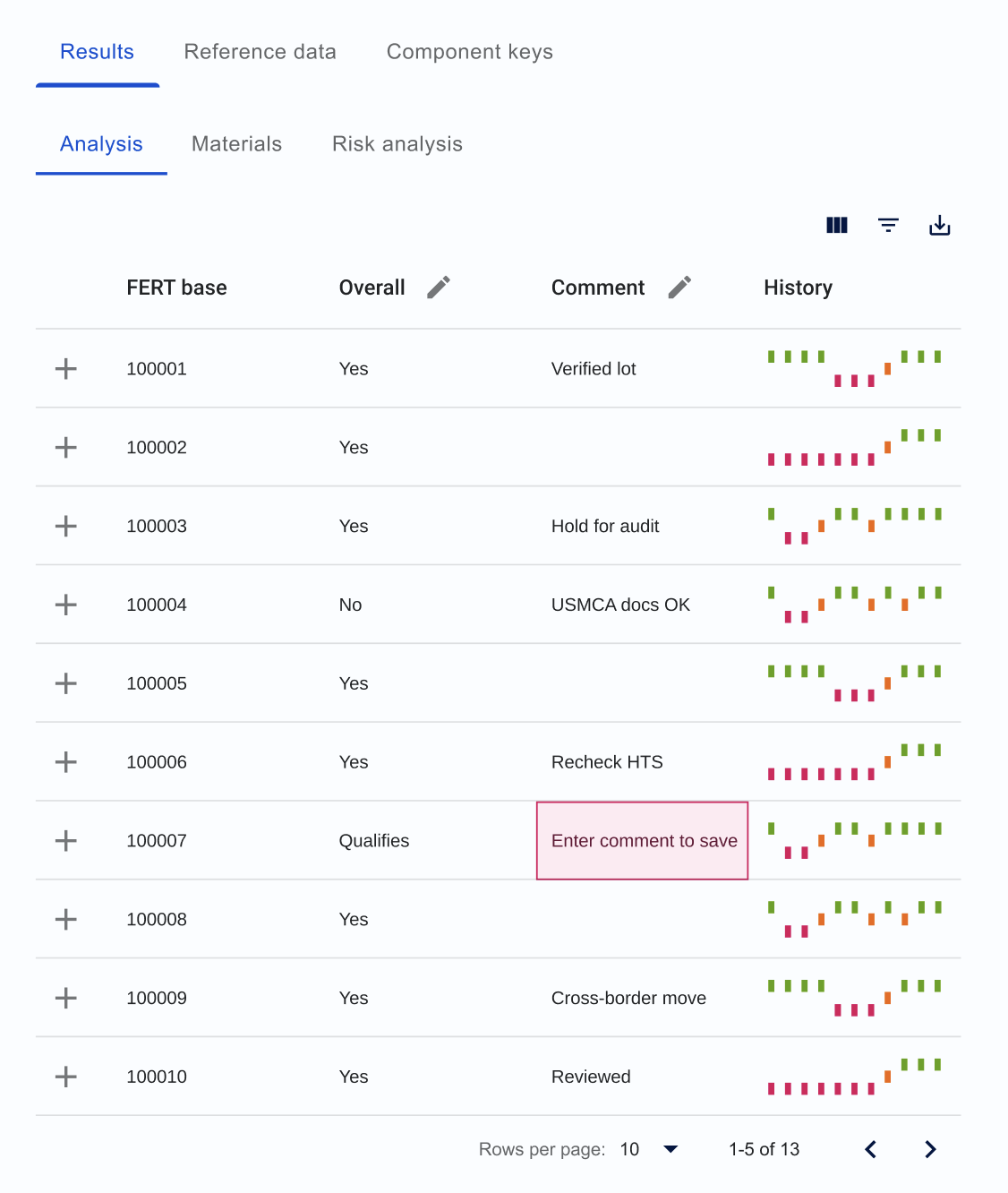
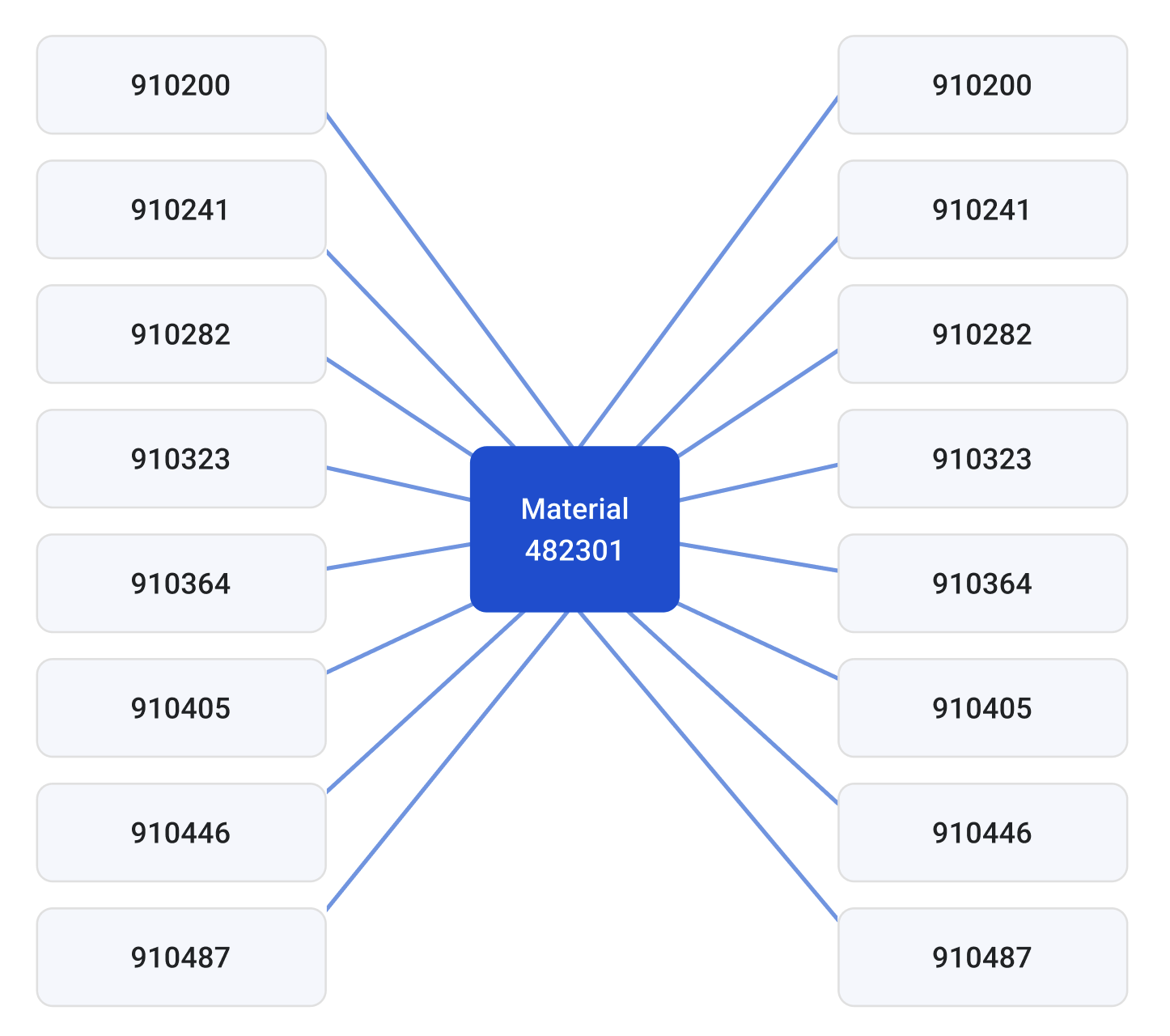
The account specialists owned tariff qualification. They looked at each product, determined whether it was subject to tariffs under USMCA, and identified what would need to change to avoid the cost. Each product contained multiple raw materials, often from different suppliers, and the same material appeared across hundreds of products.
Tariffs on Canadian and Mexican goods took effect in March 2025, and USMCA-qualifying materials were exempted days later. Rates and exemptions kept changing constantly throughout the year.
The specialists worked the catalog product-by-product, digging through a convoluted spreadsheet each time to find which material caused the problem and what it would take to fix. Nothing showed which raw material, across the entire catalog, drove the highest cost.
What was at stake
The company kept paying tariffs on materials it could have gotten qualified.
Organizing what the specialists needed to see first
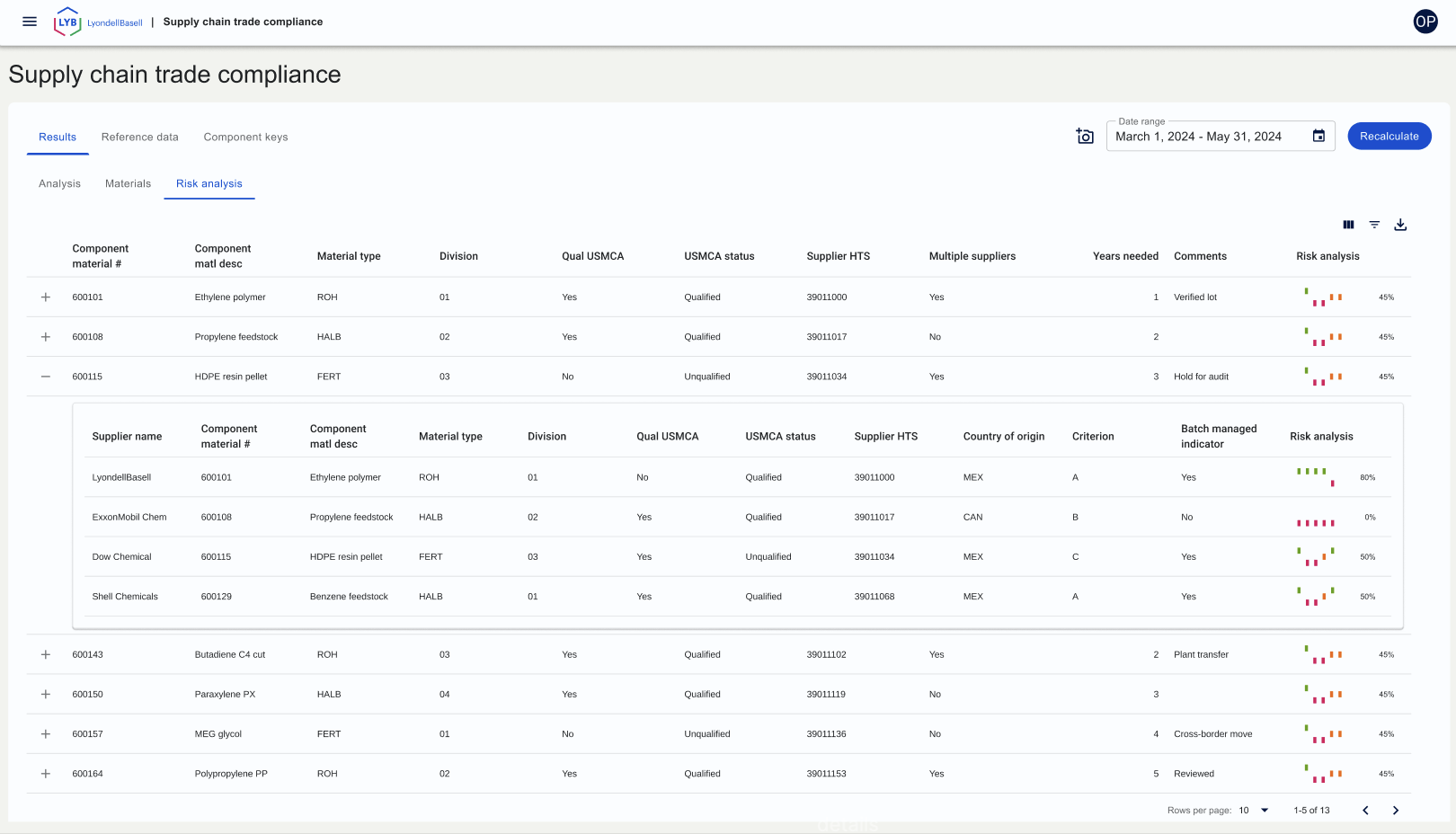
The developers wanted the product laid out by input, research, and analysis. That organizes the tool around how the data moves. I talked to the specialists and laid it out around what they needed to see first: analysis.
I designed and shipped the summary and materials tabs in Dash.
The team had recently moved from React to Python Dash, and I had already matched the company's Material UI design system in Dash, so the new product looked like the
rest of the tooling on day one.
The specialists said they needed to see materials by how many products each one appeared in and by weight.
How the chart made outliers obvious
I built it on real client data*. When I said a scatter plot would work, they were not sure. They needed to see it, and dummy data would not have helped. So I built it on real data, which highlighted the outlier.
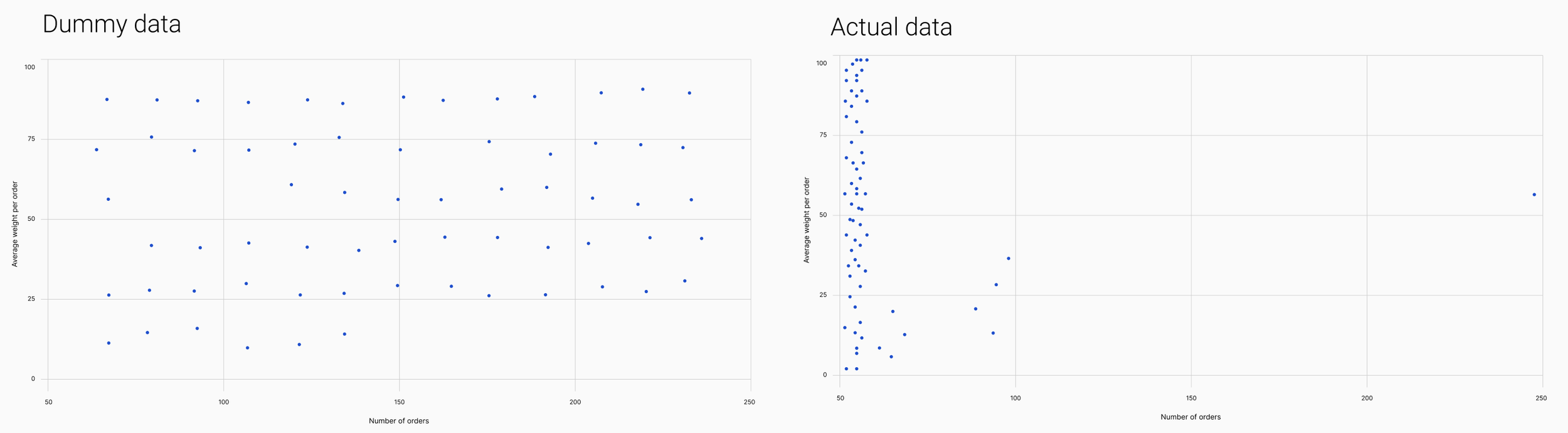
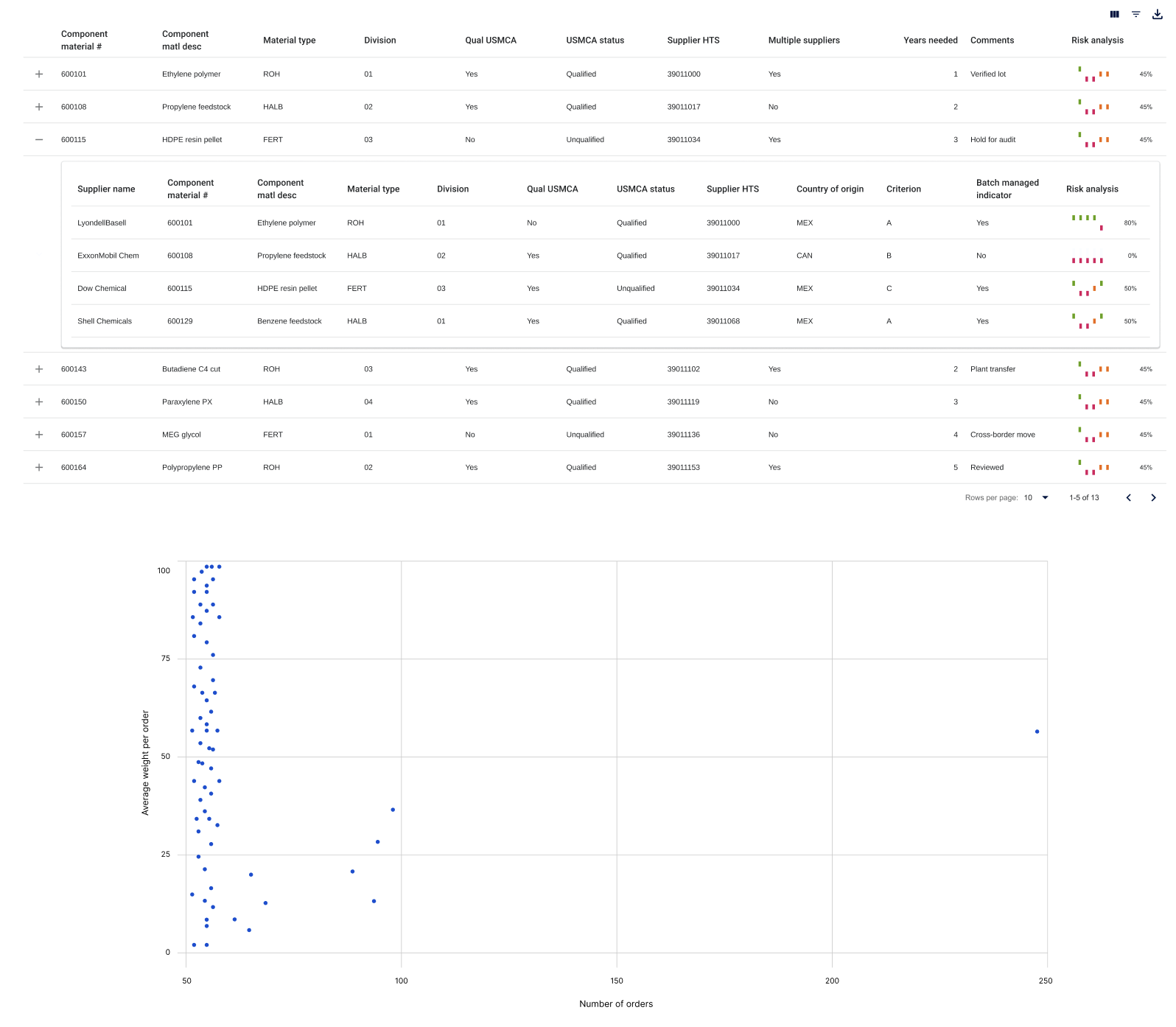
I designed a scatter plot over a sortable table. Tables often show one dimension at a time. Sort by frequency and you lose weight; sort by weight and you lose frequency. I created a scatter plot to show both at once, so specialists could spot outliers more easily.
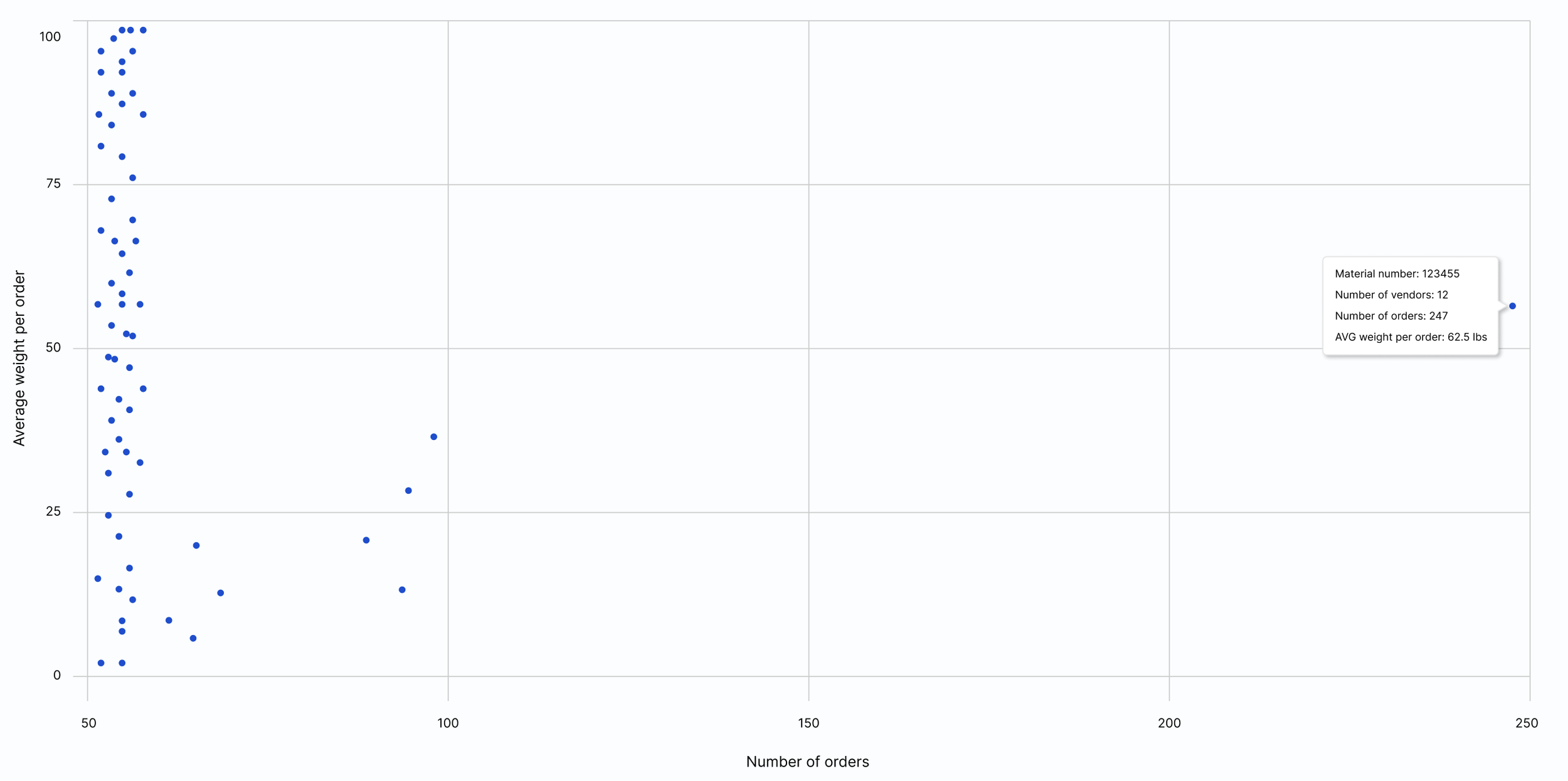
I added hover to surface the material number. Often, thousands of materials appear on one chart, and labels would be illegible. I created hover tooltips that gave numbers on demand, allowing specialists to spot and investigate materials.
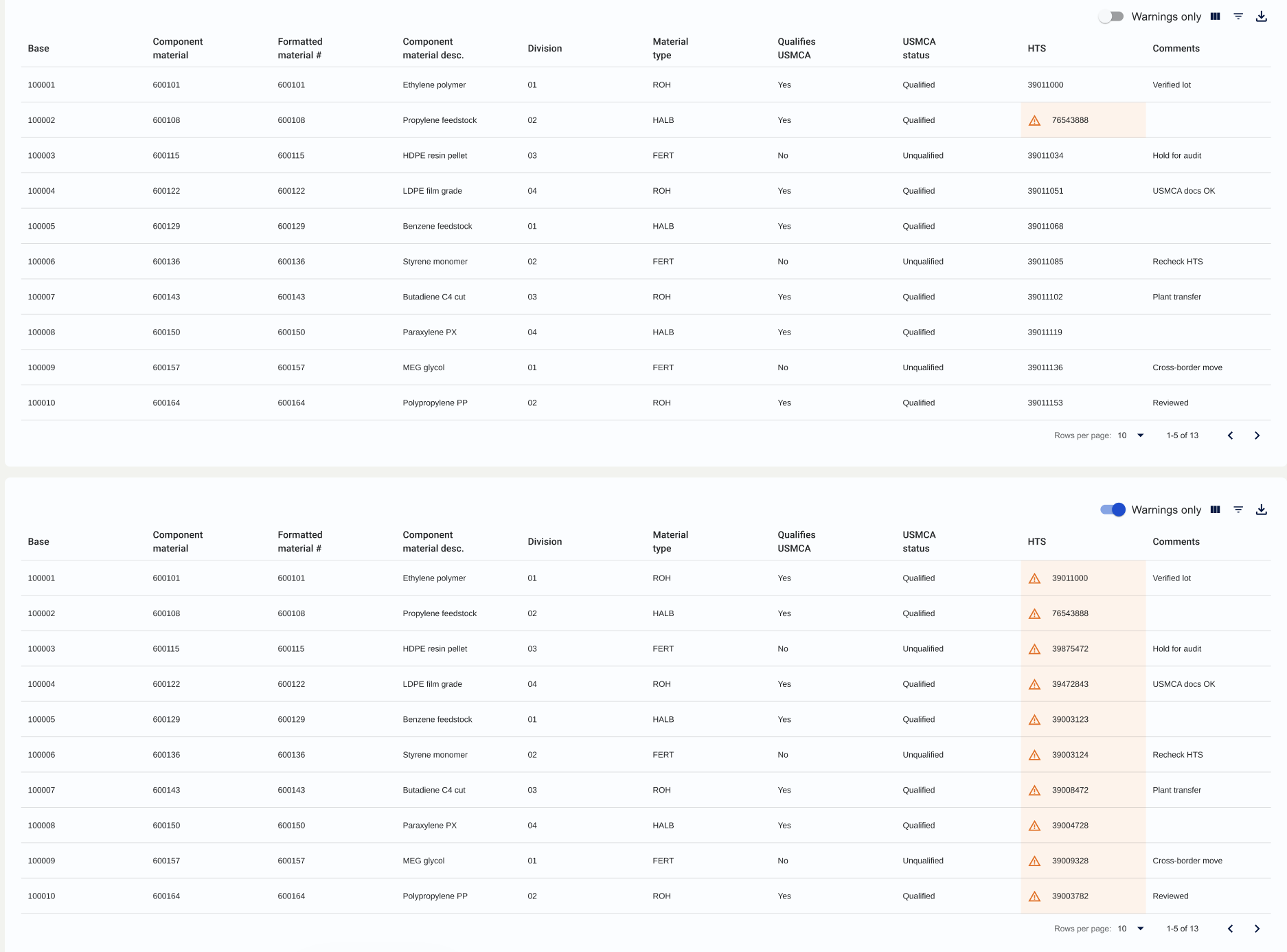
I added toggles to show only the warnings. Tables couldn't sort or filter easily around flagged rows that needed attention. I created a toggle to highlight these specific areas for glanceability.
How this found a $7.5M outlier in tariff costs
The scatter plot surfaced one raw material, in close to 250 of the client's products and far more widely used than anything else, as the largest source of tariff cost.
The specialists had not known about it. They wrote down the material number to investigate.
It ended up being a material used widely, that would have resulted in $7.5M in tariffs, had they not qualified it.