LookingGlass.aiHow I made an AI video search tool clear enough to pitch
Role: Principal product designer | Year: 2024 | Duration: 6 monthsContext. Mad Hatter AI is a pre-seed startup. Its product lets an officer search a shift of body-cam footage by description and compile the use-of-force report from what they find.
Problem. The search worked. The interface around it buried the workflow, so an officer landing on the screen couldn't tell what the tool did or how to get from a search to a finished report.
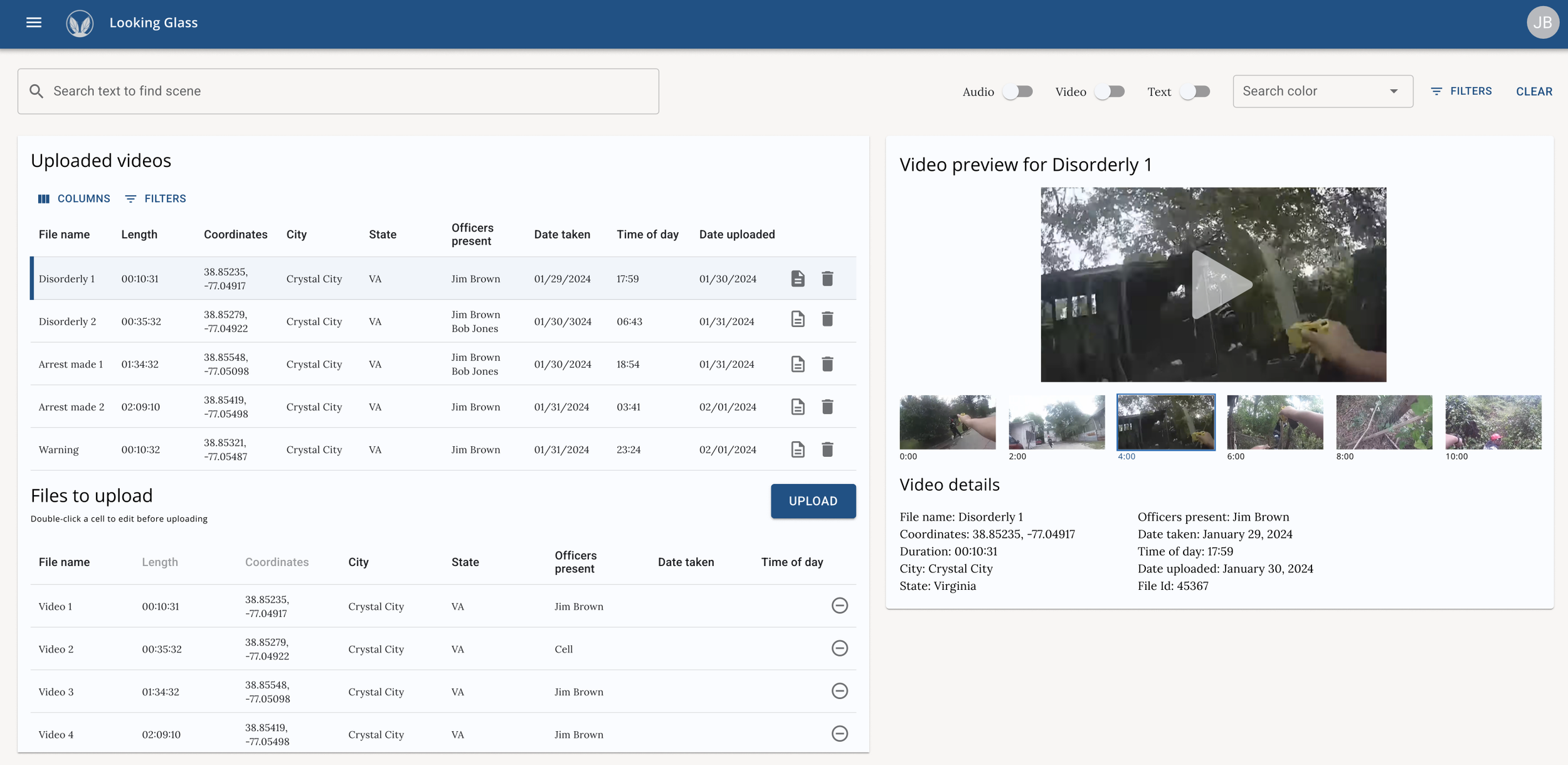
What I did. I designed the path from uploaded video to filed report, set colors, types, and spacing in Material UI, and laid out the screens in code for the developer who built the front end.
Outcome. This is the version the founder took to investors. He raised about $300K across roughly two years, never closed a seed round, and moved on.

The technology worked.
The product couldn't get past a pitch.
Departments require a written report every time an officer uses force, and writing one means finding the exact moment inside a full 8-hr shift of body-cam footage. Mad Hatter sold that search at $100 per user per month.
The technical side worked. The model searched footage by description and drafted report text from whatever clip you chose. Three police departments were using it.
However, the question was whether the product could win enough precincts to sustain itself, because the interface made it hard to evaluate. Police officers often didn't know how to start the process.
The founder came out of Homeland Security. He knew the domain and the buyer, and he gave me full latitude on the design.
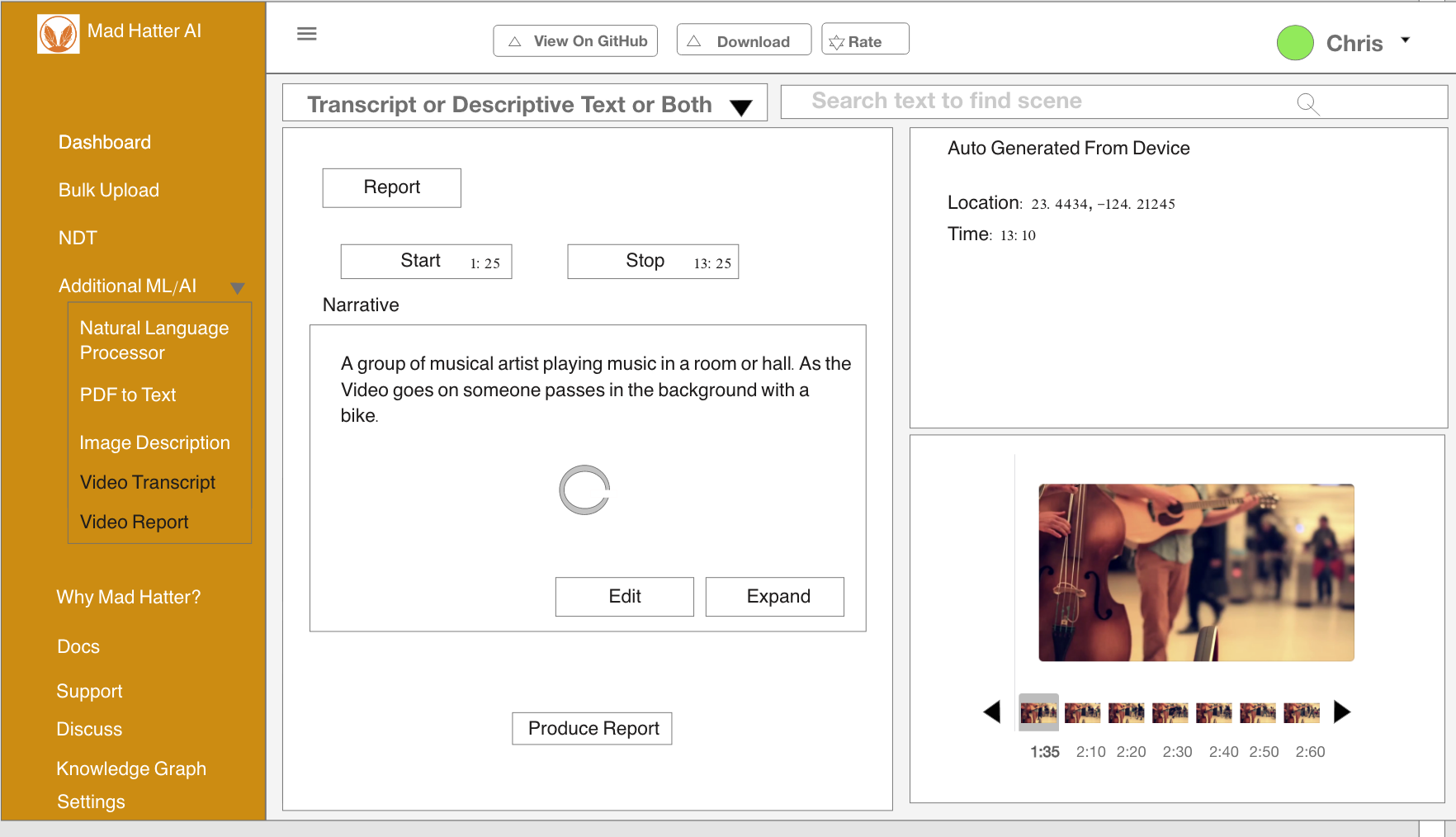
What I inherited: confusing interface that wasn’t visually appealing. “Report” and “Produce Report” buttons actually do the same thing.5 decisions that helped build an AI product
I built search around what an officer remembers. Officers can't recall everything in an 8-hour shift, but they can remember details. A red shirt. An elderly man in brown. A phrase someone said. I built search around this principle.
I limited the search inputs to what the model could handle. Color runs off a fixed list. Purple returns video clips, but indigo does not, so I removed the option.
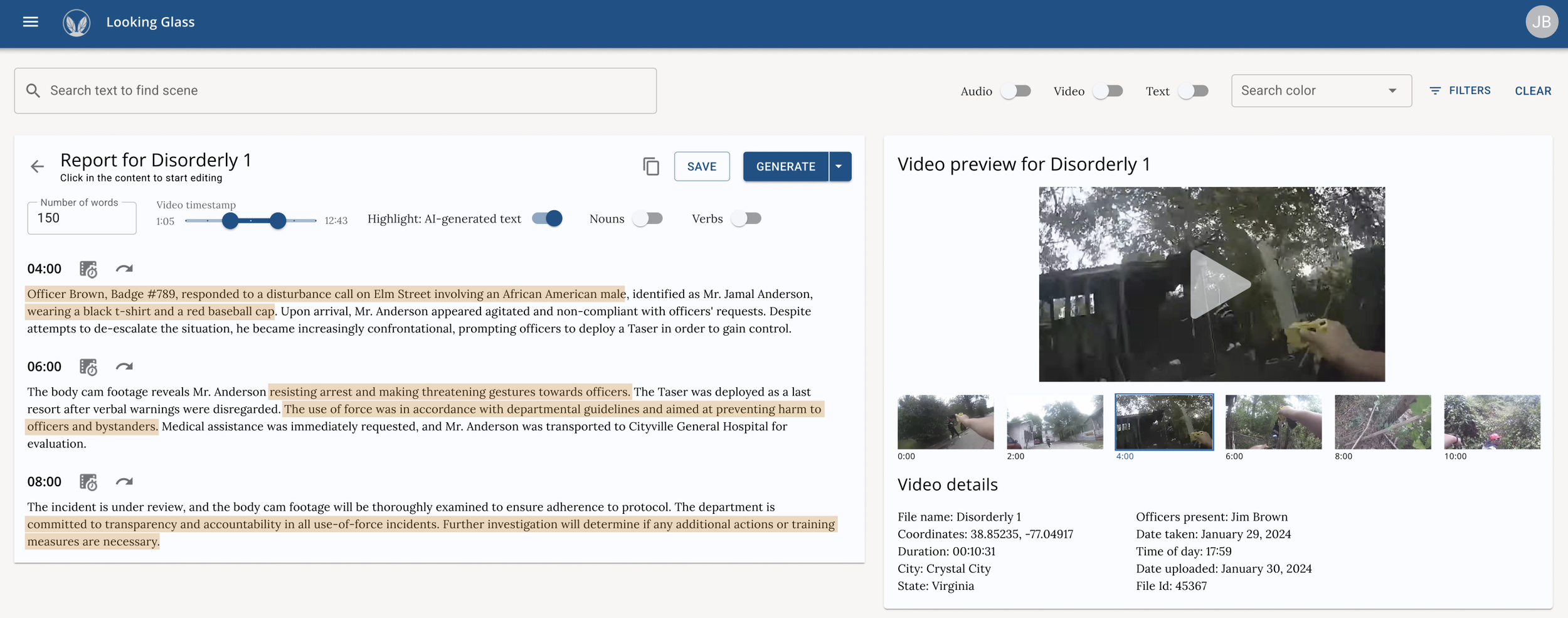
I made the AI's writing visible in the report. Officers cannot submit an AI-generated report, so every noun and verb the model wrote comes back highlighted. While reports are time-consuming, it's necessary to detail an officer's judgment.
I decided against to building an explanation layer. Confidence scores are sometimes used to match accuracy, but I didn't use them here. The officer should see the timestamp, watch the clip, and decide if this is the right one to put into a report.
I put the job in one order. Upload, filter, scrub, generate. The current workflow allowed freedom but no sequence, so I made it easier to follow the critical path.
Results and what I learned
The founder pitched investors on this version, raised about $300K over roughly two years, never closed a seed round, and moved on
What I took from it was about designing around an AI model I didn't build.
The design decisions were about limits, not capabilities. Every call I made narrowed what the model was allowed to do or made its output visible. The founder was looking at what the model could do. The value was in deciding what it shouldn't.
How much you showcase the AI model depends on what the user trusts. A police officer isn't going to trust AI to write the report or capture the right body-cam footage.